Density in the Park
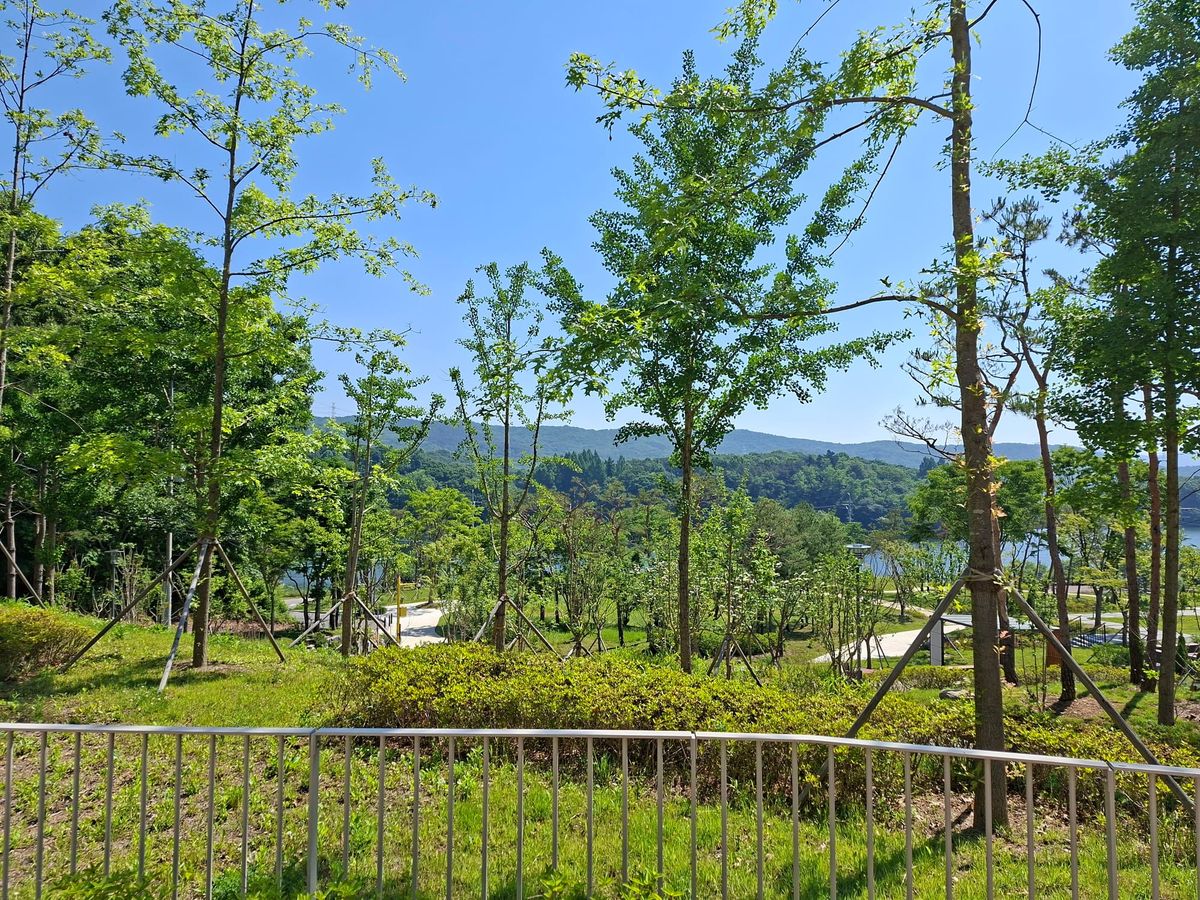
Twenty minutes from Pangyo, I arrived at forest and a lake — a two-day hackathon for the chosen few. What made the space good was not its size or cost, but that what it was for was clear. A space with a clear purpose gathers people to that purpose.
Space 100 · #02 Gray (Kim Hyunseung) · June 2026
Into the Park
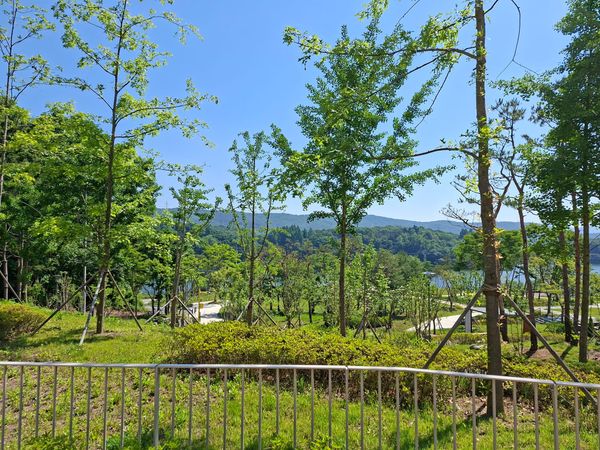
Twenty minutes by car from Pangyo. Yet where I arrived was forest and a lake.
In Yongin, Gyeonggi Province, a training center run by an IT company. Not far from the office towers, but once you step through the gate, the city disappears. In the middle of a quiet park, the conference hall, dining room, meeting rooms, terrace, and lodging all flowed into one another. A place close by, yet set apart. That distance felt strangely good.
I had come to take part in a two-day hackathon — building something with open source. And, as is my habit with spaces, I began reading the place before I read the people.
The chosen ones
The first thing I noticed was that not just anyone was there.
The hackathon was open only to those selected. Not a place you could enter by signing up, but one you were chosen and called into. For two days, those people faced not the code on their screens but each other, and made something. They worked deep into the night, ate in the same dining room, rested on the terrace.
By scale it was a vast space. Yet the people inside were surprisingly few. A chosen handful in a wide space. It looked empty, and yet felt strangely full.
What it called itself
The space described itself this way.
A ground for growth. A place to step off the screen and meet for real. They called their members crew, and used the phrase offline for online. To leave the flat screen and recover real senses; to grow not alone but in solidarity. Sentences like these were written on the walls and the signs.
They were good words. I nodded. But standing before them, I grew curious about something else. Why was this space built this way? What was it all for?
What is the place for?
What made the space good was not that it was large or well built. It was that what the place was for was clear.
The hackathon's rule was simple. It was not a contest over who built better. Instead of fast results, it looked at how actively you drew on open source and shared resources to build together. So beside the working area, they set apart a place to record not only what you made but whom you connected with. Not a place to display results, but to leave the traces of relationships that had accumulated.
The space, too, was designed to follow that purpose. The conference hall, the workrooms, the dining room, the terrace, the lodging all ran on without a break. You listened to a talk and built in the next room; when stuck, you stepped out to the terrace for air; when the night ran late, you slept in the same building. With no occasion to scatter, the connections between people did not break. In the middle of a city, everyone would have dispersed come evening. Placing it inside a park, removing the place to go home to — even that was design.
A good space does not become good by accident. It becomes good when what it is for is clear first, and then everything is arranged to fit that — the size, the flow, even the distance set apart from the city.
Offline for online
The phrase that stayed with me longest was offline for online.
These are people who work with open source. People who could, if they wished, do everything inside a screen, each in their own place. And yet they were gathered, on purpose, into one spot in the forest. In an age when the screen is enough, for what the screen cannot do. Facing one another, sharing meals, accumulating something through a sleepless night — that does not arise inside a screen, however good the tools.
This attempt is apparently not theirs alone. In Malaysia, I heard, there is an experiment where builders once connected only online now gather in one place to live, learn, and work. The more the tools take over, the more precious the place where people truly gather becomes. That training center was a space built knowing this.
It called itself a ground for growth. I call the same thing something a little different. Density. A good space is not one that lets in many people, but one that makes the space between the people it lets in dense. By emptying, by choosing, by giving it time.
A space with a clear purpose gathers people to that purpose. I saw it again, in a training center inside a park.
Space 100 · #02 · Gray (Kim Hyunseung)