An Empty Between
The Korean word for space, gong-gan, begins with the character for empty. In 2018, in a small travel bookshop on Yeongdo, I learned what it meant — that filling draws objects, but emptiness draws people.
Space 100 · First Record Gray (Kim Hyunseung) · June 2026
An Empty Between
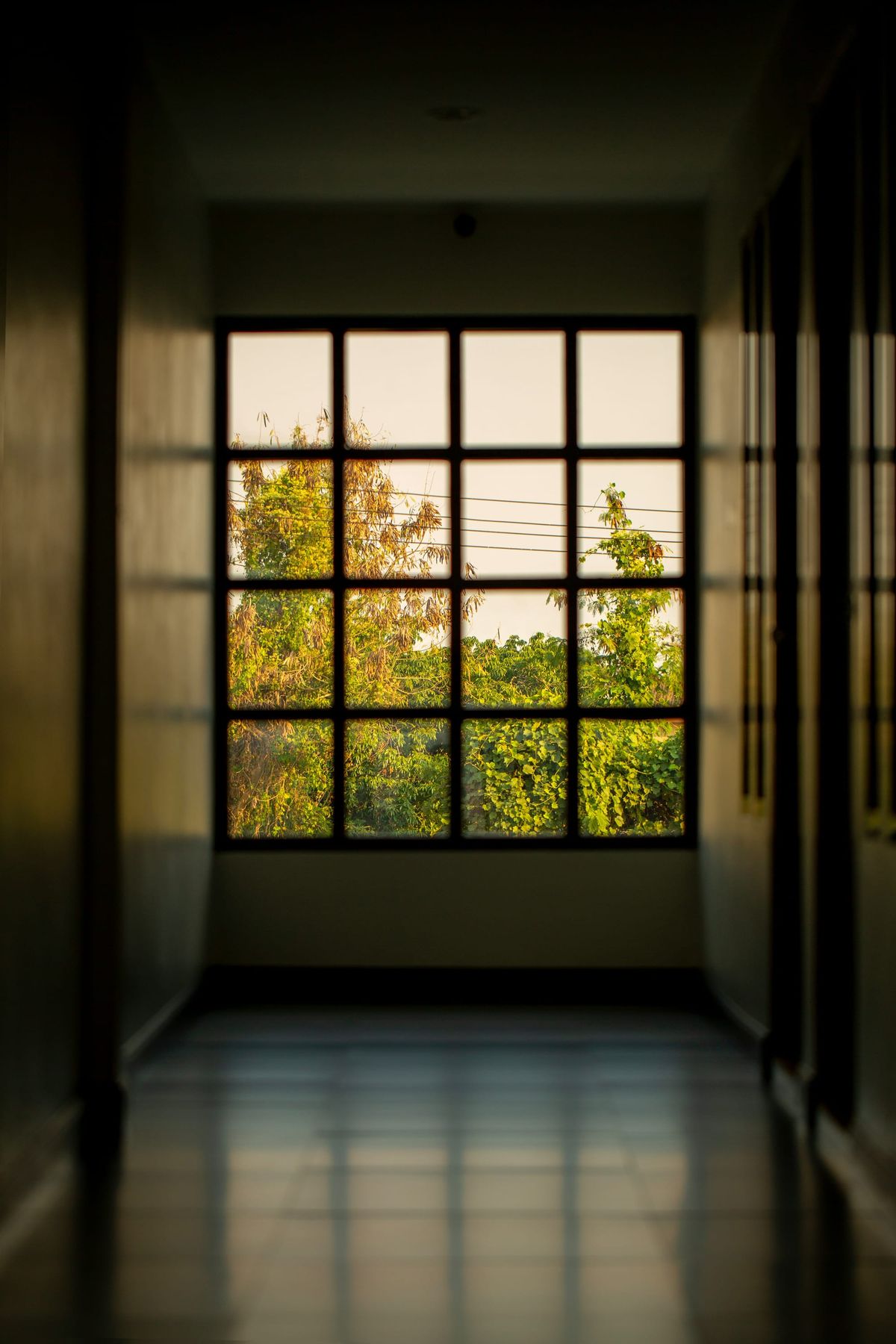
The Korean word for space is gong-gan (空間). The first character, gong, means empty. The second, gan, is the shape of sunlight through the gap of a gate — a between, an interval.
So the word itself never meant fill this up. It meant emptiness, and a gap through which something passes. That was what space was.
I only learned what the word meant after I built a bookshop.
November 2018, Yeongdo
That autumn, I opened a small travel bookshop in Cheonghak-dong, on Yeongdo — an island district of Busan.
I had been coming and going from the area for a project at the time, and the work kept widening. One day I wanted a space of my own in that neighborhood. I loved books, but more than that — browsing in other bookshops had always been rest for me. Running my eyes along the spines, pulling one out, opening it anywhere. I wanted my shop to be that kind of place for someone.
So I did not want a dense bookshop. Not a shop that crammed in one more book, but one with margin. Like a gallery, with room to breathe between the books. A curated shelf that someone who loves travel would be glad to find, and time to wander through it slowly and rest.
Looking back, I was not building a bookshop. I was building emptiness.
What emptiness costs
Emptiness is expensive — in money and in legwork.
To see what good emptiness looked like, I traveled to several cities. Bookshops in Seoul, small spaces on Jeju, old rooms in Gyeongju. I watched less how they placed the books than how they left the space between them empty — where a person slows their step, where they catch their breath. Good space, I learned on those trips, is remembered not by what it filled but by what it left empty.
Into about sixty-six square meters I put nearly fifty million won. The used bookshop I had first opened in Yangsan cost under five million for its interior — so this was ten times more. Cramming in more books would have cost nothing. But instead of filling, I spent on emptying.
I went looking for vintage furniture. The grain of old wood, chairs worn smooth by hands. I labored even to find a single window, because I believed how the light enters decides what a space becomes. Filling is cheap; emptying is dear. Making emptiness properly was, in fact, the most careful kind of filling.
Ten people at a long table
One scene from that shop stays with me most vividly.
I once held a dinner where everyone ate together. About ten people sat around a long wooden table. Some had come to buy a book, some just to look, some following someone else. The faces of those ten around the table that night — all of them enjoying the time — still lift my mood when I think of them.
That was when I understood. What made that gathering was not the books. It was the margin. Had the shelves been packed, there would have been no room for that long table, and the ten could not have gathered. The emptiness I had left called the people in. Filling draws objects; emptiness draws people.
The bookshop is gone
That bookshop is no longer there.
In the same spot now is a well-loved Italian restaurant. People come for gnocchi, risotto, pasta. The travel books I curated are gone, and the vintage furniture is probably no longer there either. The trade changed, the owner changed, what fills the room changed.
Yet one thing remained: that it is a place people want to stay in. Whether they come for a book or for pasta, it is still a space someone wants to enter and spend time in. What I made back then was not, in the end, a bookshop. Not shelves. It was an emptiness where people could stay — and that did not vanish when the trade changed.
Gong-gan. Empty, and a between. The more you try to fill it, the further it pulls away; the more you empty it, the more people enter. I learned the meaning of the word first in a small bookshop on Yeongdo.
And that lesson has followed every space I have built since.
Space 100 · First Record · Gray (Kim Hyunseung)