What Is the Next Busan
Eighteen days ago we asked — why must the next Busan be Busan? After seventeen essays, the answer gathers. The next Busan is a Busan that recognizes people. Not its port or budget, but recognition and trust — the last work left to a city when all else passes to tools.
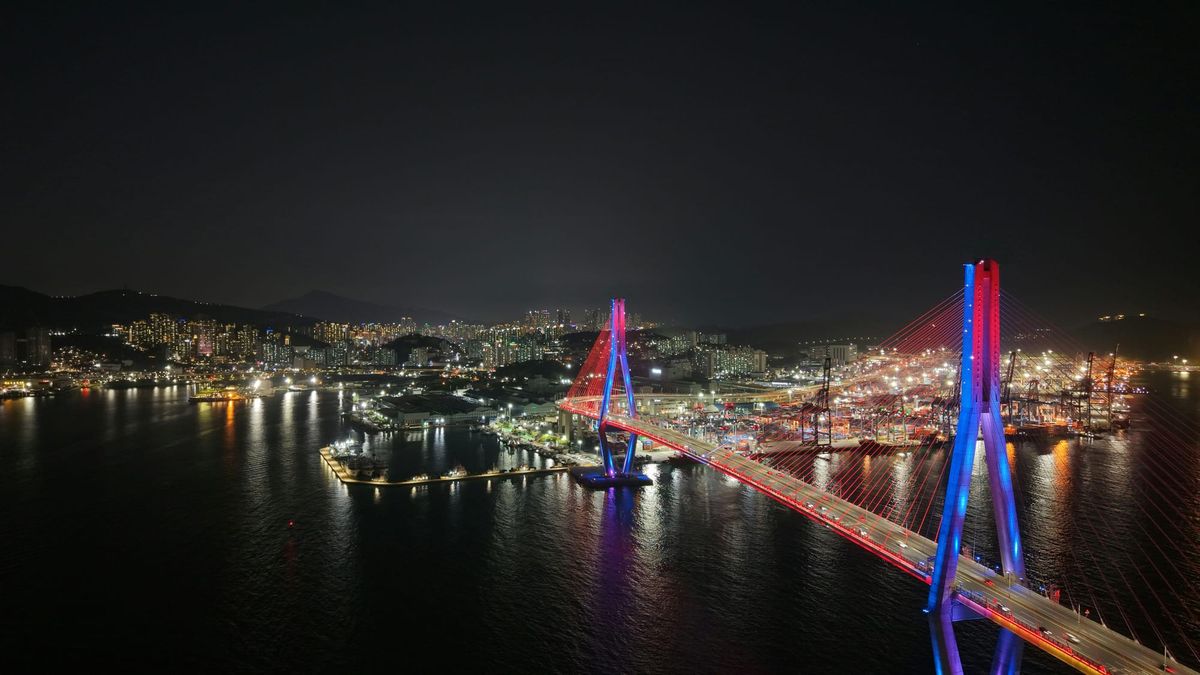
18 Questions for Next Busan · Day 18 of 18 Gray (Kim Hyunseung) · June 3, 2026
Back to the First Question
Eighteen days ago, the first question was asked. Why must the next Busan be Busan?
It was put this way then. Busan is about to choose its next mayor. Yet we talk only about whom we are choosing, and almost never about which Busan we are choosing. Today is that election day. Having passed through seventeen questions, we have come back to where we began.
This series was never meant to give answers. It was meant to arrange the questions. But after seventeen essays, one thing rose up between them. That is what these final lines record.
The seventeen were one
The questions seemed scattered. Why do the young leave, what is the sea to Busan, why has it not become a gateway, what does Busan not measure, whom does Busan recognize as its own, how does it grow and gather and reconnect people, how does it accumulate.
Yet after seventeen essays, those different questions gather into a single stem. Trust. What Busan did not measure was trust; what it failed to recognize was trust; what was severed with those who left, what vanished with one person — all of it was trust. What Busan lacked was not resources. It was the work of stacking resources between people until they became trust.
And trust begins with one thing. Recognizing. Seeing who is good at what, who is truly making something. From there trust grows, trust accumulates into an institution, and the institution outlasts the person. The seventeen essays were different faces of that one stem.
The next Busan is a Busan that recognizes
So now the first question can be answered. What is the next Busan?
The next Busan is a Busan that recognizes people. Not the ranking of its port, not the size of its budget, not the buildings it raises anew. Other cities can have those too, and some have them better than Busan. But one thing — recognizing the person who comes to Busan to make something, building that recognition into trust, and trust into an institution that remains even when people change. This cannot be bought with rank or built with budget. And that is exactly why it becomes the one thing Busan can offer the world.
The first essay asked: is the next Busan a museum built of yesterday's nostalgia, a city where today's builders work, or a port where someone arriving tomorrow stays? Now the answer. A Busan that recognizes makes those three into one. Because it recognizes builders, they work; because it recognizes those who arrive, they stay; and what accumulates that way is handed to the next generation not as a museum but as a living city.
The last work left to a city
Here one thing must be set down honestly. Why recognition, and why now?
This is an age when more and more work passes to tools. Measuring, recording, analyzing, connecting — the work that once only people did, tools now do faster and more precisely. The efficiency a city boasted of, its data, will soon be the same everywhere. But one thing never passes to the tools: people recognizing people. To look someone in the eye and know this one is real, to make room beside them and stake trust on them — this is not measured, not automated.
So in an age when everything grows the same, the one thing that makes a city different is this last thing alone. If Busan makes it its own work — then Busan becomes a different city not because it has little, but because it has what others cannot have.
From Busan
In asking eighteen questions, it did not begin from knowing all the answers. But one thing was clear. Busan has let too many good things slip away. People, chances, trust that might have accumulated.
May this time be different. To recognize, to trust, to build into an institution — and not let it slip away. That does not happen through one election. Whoever wins, there must be people who recognize, every day after. A city begins again, just so, in one person recognizing another.
It begins in Busan. It does not end in Busan. This time, we will not let it slip away.
18 Questions for Next Busan Day 18 of 18 · Gray (Kim Hyunseung)
https://doi.org/10.5281/zenodo.20524331