Why Fukuoka, not Busan?
Busan is the world's fifth largest container port. Fukuoka isn't on the list. And yet digital nomads go to Fukuoka, not Busan. The reason is not infrastructure.
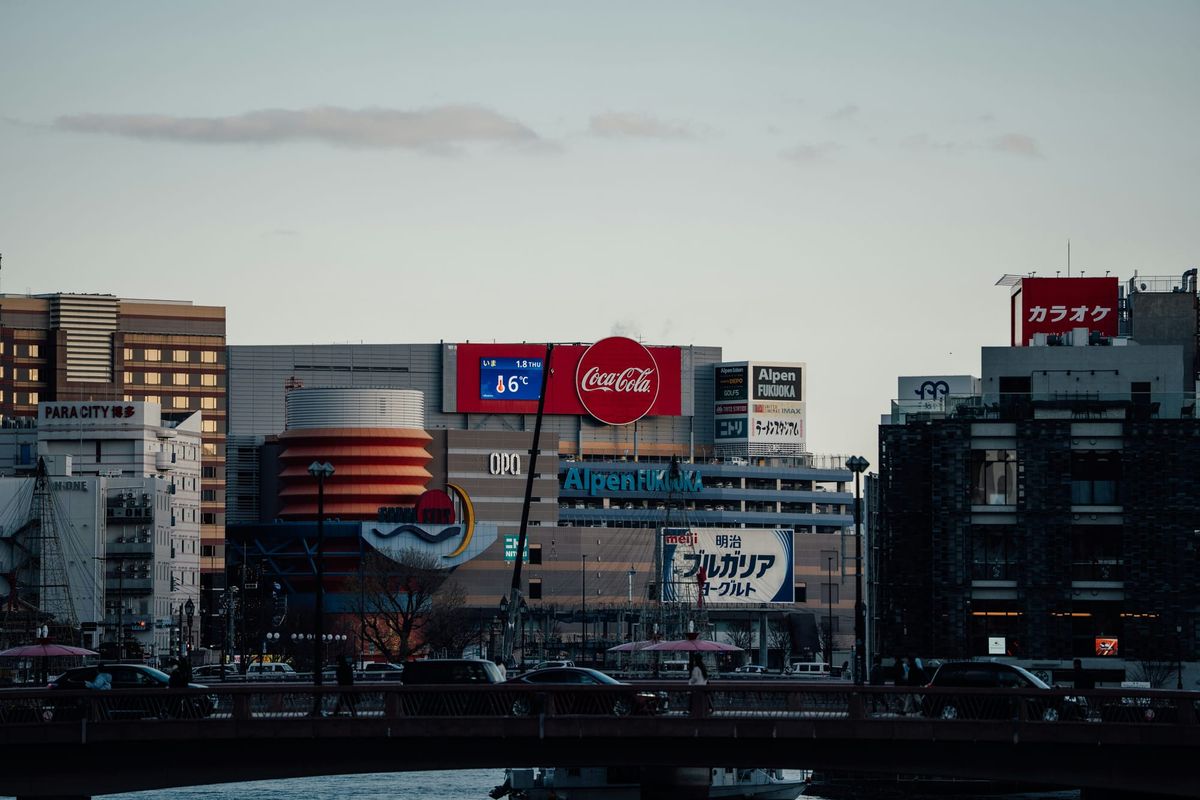
Fukuoka's population is 1.61 million. Half of Busan's.
DNV's 2025 Leading Container Ports benchmark places Busan fifth in the world. Fukuoka is not on the list.
And yet digital nomads go to Fukuoka, not Busan.
The reason is not infrastructure. The two cities answered different questions.
Fukuoka asked: How do we get foreigners to live here?
Busan asked: How do we get foreigners to stay a while?
Different questions lead to different answers.
Fukuoka declared itself a "Startup City" in 2012. And it kept that promise for thirteen years, across changes in mayor.
In 2015, it became the first city in Japan to offer a Startup Visa for foreign entrepreneurs. In Japan, starting a company as a foreigner normally required an office, two full-time employees, and 5 million yen in capital. Fukuoka's visa waived all of that and granted one year of residency on a business plan alone. A visa is not what you give to someone passing through. A visa is what you give to someone who comes to live.
Instead of demolishing a closed school, the city turned it in 2017 into Fukuoka Growth Next a startup incubator run directly by the city. Companies based there have since raised a cumulative 18 billion yen (about 160 billion won) in investment. A closed school is not a space to erase. It is a space to rewrite.
Engineer Café. Startup Café. Artist Café. Three city-run cafés. A café is not a place you pass through. It is a place you come back to.
In April 2025, CIC Fukuoka opened in the ONE FUKUOKA BLDG. CIC stands for Cambridge Innovation Center the world-class innovation campus brand born next to MIT. This is its second outpost in Asia, the first in western Japan. 3,500 square meters, 143 private offices, 40 coworking seats, 17 meeting rooms. Inside, Fukuoka Prefecture's Global Connect Fukuoka and the city's Global Business Support desk share the floor. An office is not a space a tourist rents.
Colive Fukuoka. Coliving. Cowork. Co-creation. The name itself means living together. Launched in 2023. In 2024, 436 participants from 45 countries. In 2025, 496 from 57. Their month-long stay generated 140 million yen (about 1.2 billion won) in direct local economic impact. In 2025, it was named World's Best Global Nomad Festival at the Nomad Retreats Awards.
The city needed more hotels. Ace Hotel will open in Fukuoka in 2027 the Seattle-born boutique brand's second property in Japan after Kyoto. Busan isn't on that map. A boutique hotel is not check-in-and-done. It is a neighborhood lounge.
All of this points in one direction a city that settles people.
What did Busan do?
Busan runs a workation program too. Launched in February 2023 with a flagship center near Busan Station, it drew 6,900 participants in 2024, passing 10,000 cumulative. In 2026, the Korea Tourism Organization named it a "model workation program," adding 2 billion won in national funding.
But the category Busan's workation was placed in: "experience tourism." The press releases come from the city's Department of Tourism Policy. Eligibility is defined as people whose workplace is registered outside Busan people who work elsewhere and spend some weeks here.
Everything is in that paragraph.
Fukuoka began with visa policy. Busan began with tourism policy. Fukuoka called out entrepreneurs, investors, and remote professionals. Busan called out employees of outside companies. Fukuoka designed for settlement. Busan designed for a tourist who lingers a little longer.
When you call the same person, one city hands them a voucher and ends there; another city introduces them to co-founders, investors, and a city network.
Same word. Different city strategy.
The structure follows. Busan's workation is run by the Busan Center for Creative Economy & Innovation an agency that simultaneously handles startup investment, accelerator programs, and incubation. The satellite centers are sub-delegated twice: city → the Center → privately operated satellites across five districts.
The numbers came in. The 4.1 billion won workation program, largely funded by the Ministry of Interior's regional decline response fund, drew 1,070 users in all of 2024 — roughly four per weekday on average. Several satellite centers closed during that period.
Because no dedicated body exists. No dedicated body exists because no one has decided what would be dedicated to it.
Fukuoka decided. We are a city that settles foreigners. And it kept that promise for thirteen years. It built a dedicated body to keep it. It didn't mix the program with other agendas. When mayors changed, the line didn't break.
Cities become the cities they declare themselves to be. Fukuoka declared itself. Busan has not yet declared itself.
The cities that became gateways are not cities you pass through. They are cities you come back to. Busan has every qualification to be a gateway, but has never decided to be a city people come back to.
The next Busan must begin with that decision.
📚 Cite this article · 이 글 인용하기
Kim, H. (2026). Why Fukuoka, not Busan? Busanloop · 18 Questions for Next Busan, 1(6), Q6.
https://doi.org/10.5281/zenodo.20373604
📑 PDF: Download English version · 🇰🇷 한국어 원본: 왜 부산이 아니라 후쿠오카였나